,
Mobile App
,
2023
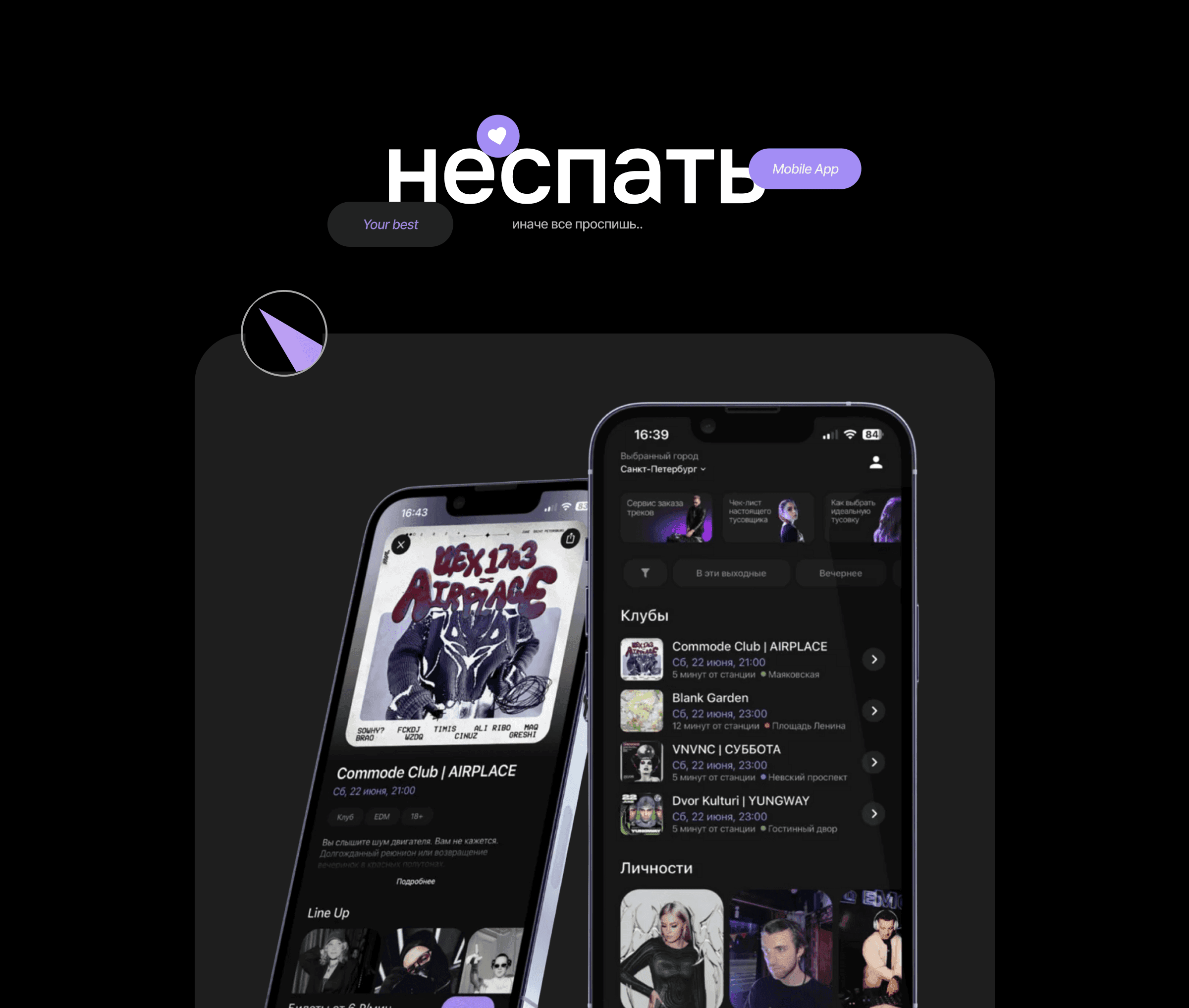
Nespat' — a mobile app designed to help people choose nightlife events, not just browse them. I explored how product design can reduce decision fatigue and help users confidently choose where to go, based on music, vibe and personal preferences.
Tight 2-month MVP timeline with limited research data → had to prioritize core decisions vs nice-to-have features.
Define a decision-focused information architecture
Establish a flexible filtering system
Create a consistent interaction model across features
Launch an MVP and iterate quickly based on real usage
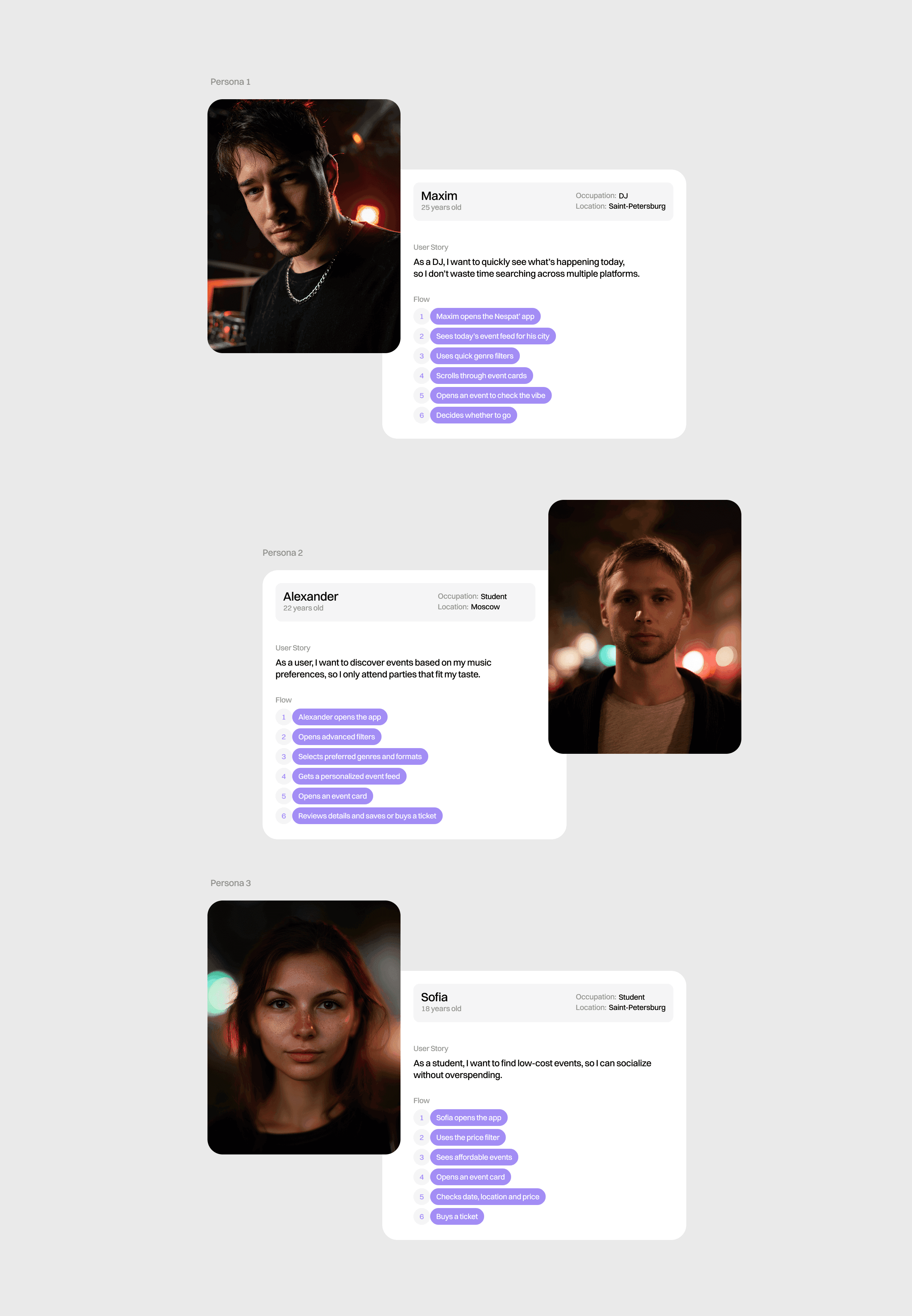
While user motivations differ, the core problem remains the same: people want to make decisions quickly and with confidence.
According to "Jobs To Be Done", I created personas what were used as decision-making tools to prioritize features, surface trade-offs, and avoid unnecessary complexity. They were structured around users’ core goals and decision moments rather than demographic differences.
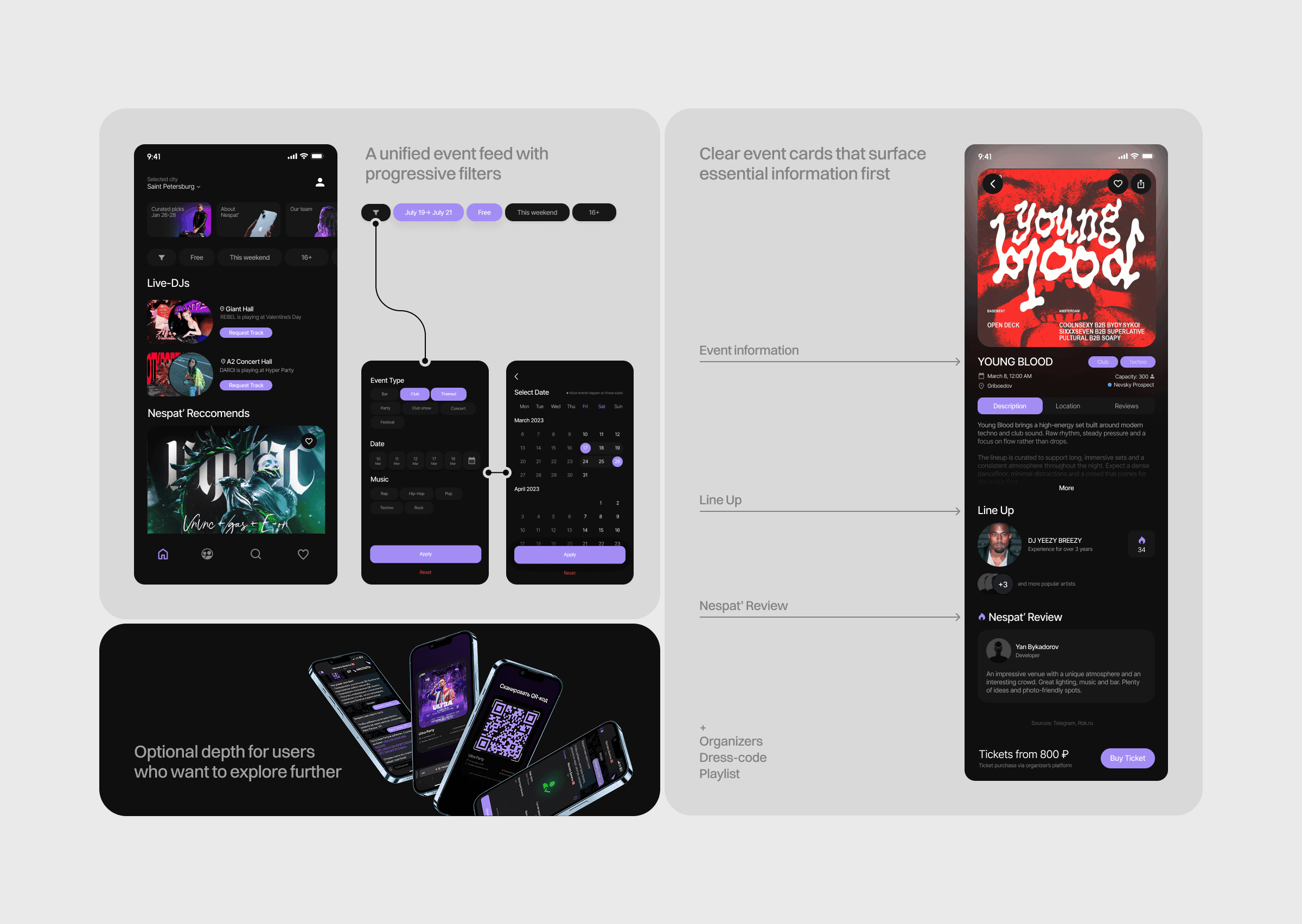
Based on persona insights and findings from focus group research, several core design principles emerged.
To support fast and confident decision-making across different user types, the experience was built around three key ideas presented above.
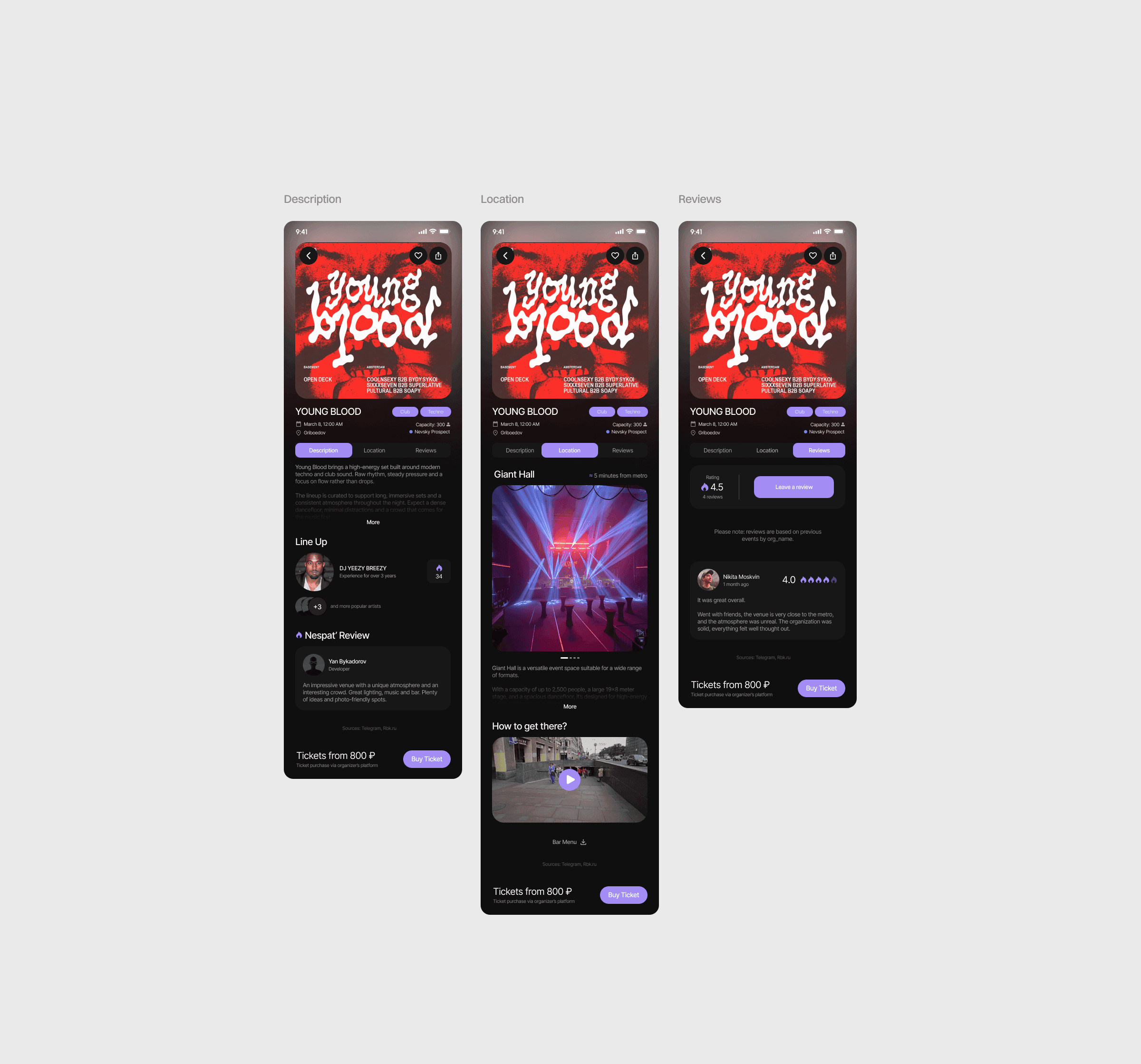
By separating content into clear sections such as Description, Location, and Reviews, the screen supports different user intents: discovering the vibe, understanding logistics, and building trust through social proof.
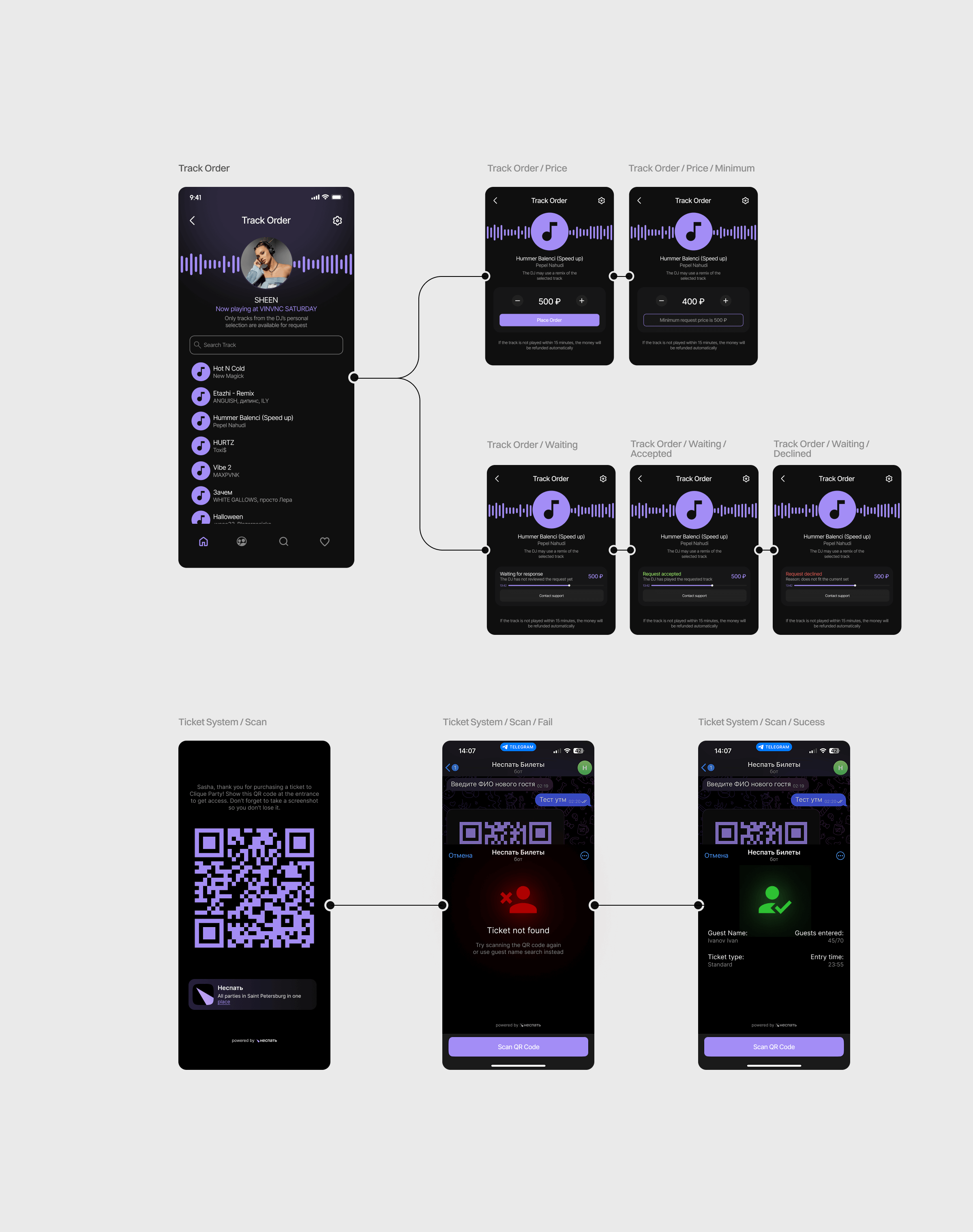
The track request and ticket validation systems were introduced as part of the product update and did not exist in the first version of the app.
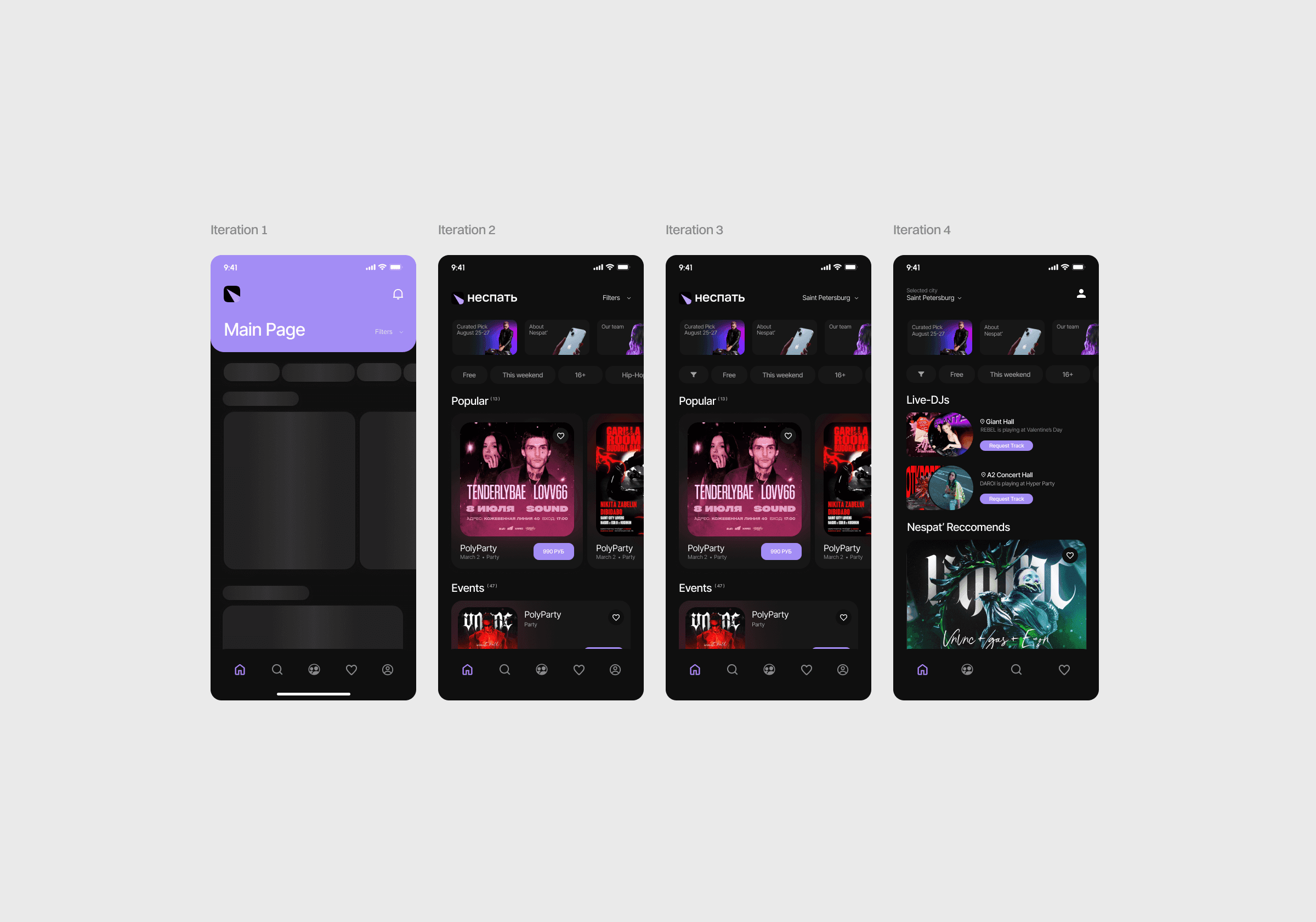
The home screen evolved through multiple iterations as the product matured. Rather than a complete redesign, changes were introduced incrementally. Each iteration focused on improving clarity and reducing cognitive load.
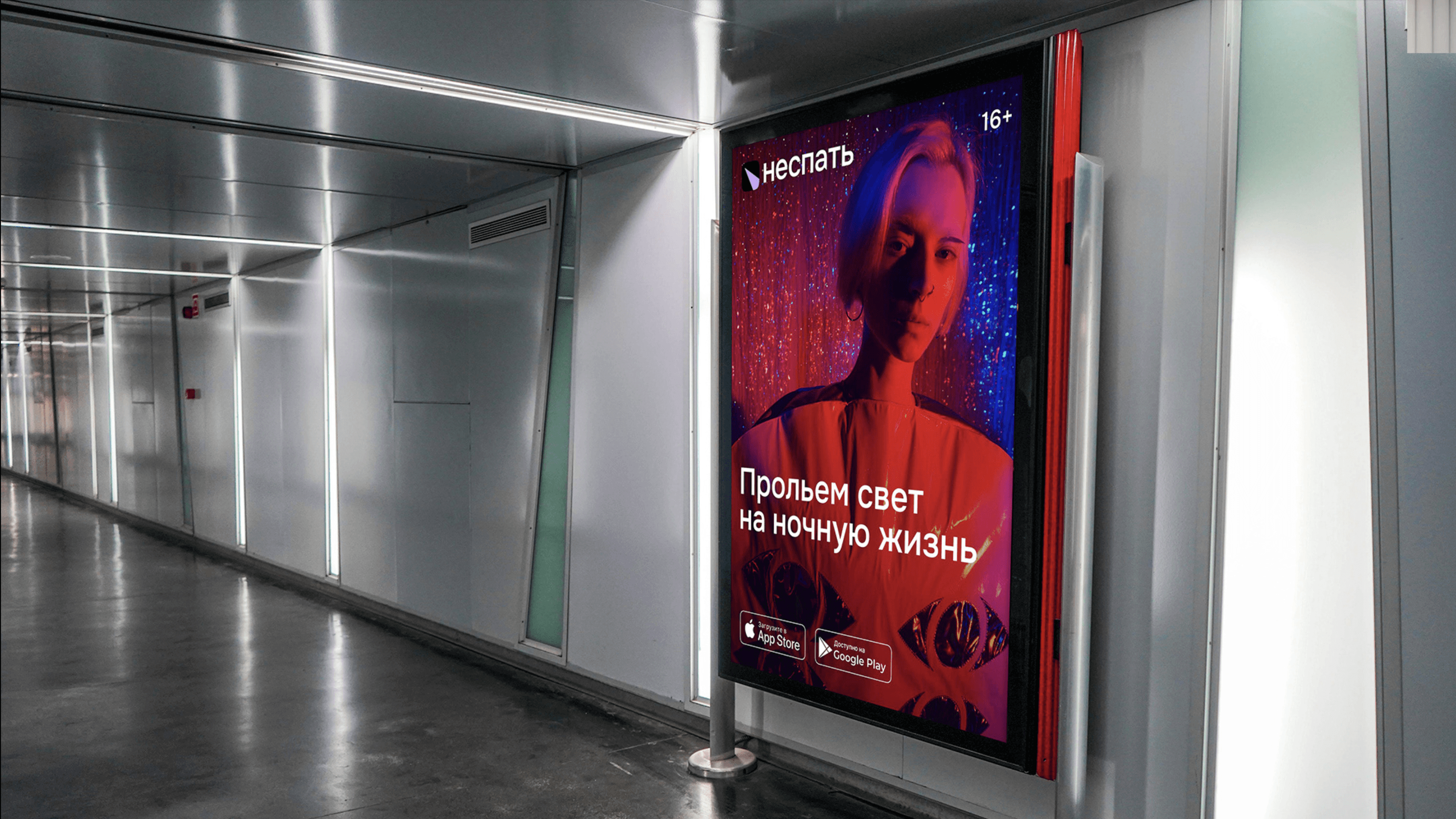
Overall, Nespat was a project about elevating nightlife discovery from fragmented browsing to confident decision-making. By grounding design decisions in user insights and iterating towards clarity, the product experience prioritised relevance and ease of choice at every step.
Working on Nespat' strengthened my ability to balance simplicity with optional depth, translate behavioural insights into structured interfaces, and design flows that work both in digital exploration and real-world contexts.
If given more time, data and especially investments, the next steps would focus on validating personalization hypotheses, measuring decision conversion metrics, and refining notification patterns to further reduce choice friction.